Что такое базисный пункт (BPS)?

Базисные пункты, которые также называют bps или бипсами, являются единицами измерения, используемыми в финансовой отрасли для обозначения процентного изменения стоимости или ставки финансового инструмента.
Один базисный пункт эквивалентен 0,01% (1/100 процента) или 0,0001 в десятичной форме.
Аналогичным образом, дробное значение этой единицы измерения, такое как 1,5 базисных пункта, будет эквивалентно 0,015% или 0,00015 в десятичной форме.
В большинстве случаев в базисных пунктах измеряют изменения процентных ставок и доходности облигаций.
Интересные примеры
Например, в июне 2017 года Федеральный комитет по открытому рынку США (FOMC) увеличил ставку-ориентир на 25 базисных пунктов до диапазона от 1% до 1,25%.
Это значит, что ставки были увеличены на 0,25% процентного пункта от 0,75% до 1%.
На рынке облигаций базисный пункт используется для обозначения доходности, выплачиваемой инвестору по облигации.
Например, если доходность облигаций поднимается с 7,45% до 7,65%, то говорят, что она выросла на 20 базисных пунктов.
Рассмотрим следующее утверждение: “Доходность облигаций составляла 10%, но затем выросла на 5%“.
Данный сценарий можно интерпретировать двумя способами. Может быть, что рост на 5% был абсолютным, и в этом случае новое значение доходности теперь составляет 15%.
С другой стороны, увеличение могло быть и относительным – 5% от 10% равняется 0,5%, поэтому новое значение доходности будет 10,5%.
Устранение неопределённости
Поскольку один базисный пункт всегда равен 1/100 части от 1%, или 0,01%, из приведённого выше примера можно понять, как они позволяют устранить двусмысленность и создать универсальный способ измерения, который будет применим к доходности любой облигации.
Увеличение с 10% здесь составит либо 50 базисных пунктов, что даст нам 10,5%, либо 500 базисных пунктов, то есть, до 15%.
Базисные пункты используются в основном для измерения доходности и процентных ставок, но их также можно использовать для обозначения процентного изменения стоимости активов, таких как акции.
Можно услышать, что фондовый индекс за день торгов вырос на 134 базисных пункта. Это означает, что значение индекса увеличилось на 1,34%.
| BPS | Проценты |
|---|---|
| 1 | 0,01% |
| 10 | 0,10% |
| 25 | 0,25% |
| 50 | 0,50% |
| 100 | 1% |
| 1000 | 10% |
| 10000 | 100% |
Конвертация базисных пунктов в проценты
Самый простой способ конвертировать базисные пункты в процентную форму – просто взять количество базисных пунктов и умножить его на 0,0001, что даст нам процентное значение в десятичной форме.
Поэтому, если вам нужно конвертировать 384 базисных пункта в проценты, просто умножьте 384 на 0,0001. Это даст вам 0,0384 или 3,84% (0,0384 х 100).
Это также можно сделать в обратном порядке, чтобы из процентного значения получить количество базисных пунктов путём деления процента (в десятичной форме) на 0,0001.
Например, если ставка по облигации выросла на 2,42%, просто возьмите 0,0242 (2,42% / 100), разделите на 0,0001, и вы получите 242 базисных пункта.

Николай — опытный специалист в финансовых рынках и сооснователь IamForexTrader. С 2014 года он успешно торгует на Форексе и с 2017 года активно участвует в криптовалютном рынке.
Он разрабатывает инвестиционные стратегии, адаптируемые под любой уровень опыта, и с 2018 года активно инвестирует в акции, облигации и ETF.
Basis Point (BPS) Explained for Interest Rates and Investments
These show a change in the value or rate of a financial instrument.
Gordon Scott has been an active investor and technical analyst or 20+ years. He is a Chartered Market Technician (CMT).
Pete Rathburn is a copy editor and fact-checker with expertise in economics and personal finance and over twenty years of experience in the classroom.
A basis point is a common unit of measure for interest rates and other percentages in finance. Basis points are typically expressed with the abbreviations bp, bps, or bips.
One basis point is equal to 1/100 th of 1%, or 0.01%. In decimal form, one basis point appears as 0.0001 (0.01/100). Basis points (BPS) are used to show the change in the value or rate of a financial instrument, such as 1% change equals a change of 100 basis points and 0.01% change equals one basis point.
Key Takeaways
- A basis point is a standard measure for interest rates and other percentages in finance.
- One basis point equals 1/100 th of 1%, or 0.01% (and .0001 in decimal form).
- The word basis comes from the base move between two percentages, or the spread between two interest rates.
- The basis point is commonly used for calculating changes in interest rates, equity indices, and fixed-income security yields.
- Basis points are also used when referring to the cost of mutual funds and exchange-traded funds.
Investopedia / Joules Garcia
Understanding Basis Points (BPS)
The word basis in the term basis point comes from the base move between two percentages, or the spread between two interest rates. Since the changes recorded are usually narrow, and because small changes can have outsized outcomes, the basis is a fraction of a percent.
The basis point is commonly used for calculating changes in interest rates, equity indices, and the yield of a fixed-income security. It is common for bonds and loans to be quoted in terms of basis points.
For example, it could be said that the interest rate offered by your bank is 50 basis points higher than the Secured Overnight Financing Rate (SOFR). A bond whose yield increases from 5% to 5.5% is said to increase by 50 basis points. Interest rates that have risen by 1% are said to have increased by 100 basis points.
If the Federal Reserve Board raises the target interest rate by 25 basis points, it means that rates have risen by 0.25% percentage points. If rates were at 2.50%, and the Fed raised them by 25 basis points, the new interest rate would be 2.75%.
Refresher Course
If you start with a decimal and want the figure in percentage form, multiply by 100. If you start with a percentage and want the figure in decimal form, divide by 100.
Special Considerations
By using basis points in the conversation, traders and analysts remove some of the ambiguity or confusion that can arise when talking about percentage moves. For example, if a financial instrument is priced at a 10% rate of interest and the rate experiences a 10% increase, it could conceivably mean that the financial instrument is now 11% (0.10 x (1 + 0.10) or it could mean that it is now 20% (10% + 10% = 20%).
The use of basis points, in this case, makes the meaning clear. If the instrument is priced at a 10% rate of interest and experiences a 100 bp move up, its rate would then be 11%. If the instrument experiences a 1,000 bp move up, it would be 20%.
| Basis Points | Percentage Terms |
|---|---|
| 1 | 0.01% |
| 5 | 0.05% |
| 10 | 0.1% |
| 50 | 0.5% |
| 100 | 1% |
| 1000 | 10% |
| 10000 | 100% |
Price Value of a Basis Point
The price value of a basis point (PVBP) is a measure of the change in the absolute value of the price of a bond for a one basis point change in yield. This may also be referred to as DV01, or the dollar value change for a one bp move. It is another way to measure interest rate risk and is similar to duration, which measures the percent change in a bond price given a 1% change in rates.
PVBP is just a special case of dollar duration. Instead of using a 100 basis point change, the price value of a basis point simply uses a one basis point change. It does not matter if there is an increase or decrease in rates because such a small move in rates will be about the same in either direction.
Basis Points and Investments
Basis points are also used when referring to the cost of mutual funds and exchange-traded funds (ETFs). For example, a mutual fund’s annual management expense ratio (MER) of 0.15% will be quoted as 15 bps.
When funds are compared, basis points are used to provide a clearer understanding of the difference in their costs. For example, an analyst may state that a fund with 0.35% in expenses is 10 basis points lower in cost than another with an annual expense of 0.45%.
Since interest rates don't apply to equities, basis points are less commonly used as terminology for price quotes in the stock market. Instead, stock prices are quoted in dollars and cents.
What Is a Basis Point?
Basis point is a term used in finance to refer to changes in values or interest rates. One basis point equals 0.01%. Put differently, 1/100 th of 1%, 0.01%, and 0.0001 all express the same thing: one basis point. For example, five basis points could be expressed as 0.05%. Likewise, if an interest rate increased from 5.00% to 5.25%, it moved up by 25 basis points.
Why Use Basis Points Versus Percentages?
The reason that traders use basis points to express changes in value or rate is because it can be clearer and prevent any ambiguity. This can help expedite communications and avoid trading mistakes. Since the values of financial instruments are often highly sensitive to even small changes in underlying interest rates, ensuring clarity can be very important for traders.
Where Does the Term Basis Point Come From?
The term basis point originates from the term basis, which refers to the difference (or spread) between two interest rates.
How Are Basis Points Used?
Oftentimes, traders will use basis points to refer to the change in value of a security or when comparing the rates on different securities. For example, you may hear the term used when yields on corporate bonds and treasury securities are compared.
Bps это сколько в процентах
Send Us Your Feedback / Suggestion
For further assistance, please Contact Us
Adblocker Detected

We always struggled to serve you with the best online calculations, thus, there’s a humble request to either disable the AD blocker or go with premium plans to use the AD-Free version for calculators.
Or
Disable your Adblocker and refresh your web page 😊
Table of Content
| 1 | What is priceeight Class? |
| 2 | priceeight Class Chart: |
| 3 | How to Calculate priceeight Density (Step by Step): |
| 4 | Factors that Determine priceeight Classification: |
| 5 | What is the purpose of priceeight Class? |
| 6 | Are mentioned priceeight Classes verified by the officials? |
| 7 | Are priceeight Classes of UPS and FedEx same? |
Get the Widget!
Add this calculator to your site and lets users to perform easy calculations.
Feedback
How easy was it to use our calculator? Did you face any problem, tell us!
The Basis Point Calculator is used to find the interest rate and percentage. We use the basis point term to find the percentage change in the financial statements.
Generally, we take one base point equal to the 1/100 the all the assets. The BPS to percentage can be represented as 0.01%, of total owners’ equity.
What is a Basis Point?
“The base point is a unit of measurement equal to 1/100 or 1% or 0.01”.
We need a basis point converter to exactly find the value of the basis point.
How many basis points is 1 percent?
The value of 1 base point=1/100
“The basis point is the standard measurement for calculating the interest rates and the percentage in finance”.
Benefits of Basis Points?
There are different reasons why investors use the basic points are:
The bps conversion is used by the investors to find the incremental changes in the securities and the interest rate reporting,BPS calculation can also be useful to avoid any ambiguity regarding the interest rate. Companies try to calculate BPS ,to find the performance of their competitor. When dealing with stock market business, basis point conversion is critical when you are identifying the share price. A basis point converter is essential for estimating the stock price.
Why do Investors use BPS Points?
The Basis point calculator incremental interest rate changes for securities and interest rate reporting. You can marginalize ambiguity and confusion when discussing relative and absolute interest rates. Especially when the rate difference is less than 1 percent, but the amount has material importance.
For example, when discussing an interest rate that has increased from 11% to 12%, some may use the absolute method stating there is a 1% increase in the interest rate.In comparison, some may use the relative method stating a 9.09% increase in the interest rate. Using a basis points calculator eliminates this confusion by stating that there is an increase in the interest rate of 100 basis points. The basis point calculator helps to find the exact values to take corrective actions.
The application of the Basis Point:
The bps conversion is applied to yield the interest rate, but there are significant applications of Basis points in the various financial sectors. The most important is to determine the stock value and index the share value. The other application of the Basis points in the Treasury bonds, and Corporate bonds.
The equity securities, such as common stock, are determined by the Basis point.The main purpose of the Basis point is to find the exact value to pay to the investors. For example, if a company wants to find the bond yield, the yield is 20 Basis points equal to the difference of 7.45% to 7.65%. The percent to basis points is an instrument for finding the exact yield.
How to Calculate Basis Point Value in Decimal?
We can convert the basis points to decimal values by first converting them to the percentage point, then to the decimal value.
The bps conversion from the Basis point to the decimal value is given below:
1 Basis points=1/100=0.01%=0.0001
The standard conversion from the Basis point to the decimal value is given below in the table:
| Basis Points | Percentage Points | Decimal Value |
| 1 | 0.01% | 0.0001 |
| 5 | 0.05% | 0.0005 |
| 10 | 0.1% | 0.001 |
| 50 | 0.5% | 0.005 |
| 100 | 1% | 0.01 |
| 1000 | 10% | 0.1 |
| 10000 | 100% | 1 |
Practical Example?
What is meant by 50 Basis Points and how can we describe it into the decimal value?
1 Basis Point is equal to 0.01 %
Let B be a basis point
Therefore, B x 100 = 50
We can take more accurate actions due to the basis point calculator
Working of Basis Point Calculator:
Enter the following values in the BPS calculator:
- Enter the value of Decimal point,
- Enter Percent (%)
- Enter Permille ( ‰ )
- Hit the calculate button to find the basis point
Basis points calculator displays:
- The Basis point is calculated
FAQs:
How much is 0.6 Basis Points?
The difference between the interest rate of 9.85 percent and 9.36 percent is 0.6 percent. When we are using the basis point calculator, we can determine it is equal to 60 basis points.
Can we convert Dollars into Basis Points?
We need to divide the sale value by 100 to find 100 basis points. We can sell our stock option for $150000, so 100 bps is $150 for our given values. The bps calculator can be a good way to find the values in percentage.
How much is 100 Basis Points?
The 100 basis points are equal to 1%, the Basis measured to percentage by the BPS converter.
How much is 150 Basis Points?
You can find the percentage by multiplying the basis points with 0.0001 (150 × 0.0001 = 0.015). As such, the decimal and percentage equivalent of your mortgage basis points is 0.015 or 1.5%.
Conclusion:
The basis points are the deciding factors for the investors who are willing to invest their money in any financial instrument of any kind like bond securities, or to calculate the interest rates. We are also able to find the profit margins accurately by the basis point. The basis point calculator can be a great estimation for finding our profit margins and the share price.
References:
From the source of Wikipedia: Basis point , Definition
From the source of the Wallstreetmojo: Basis Points (BPS) , What Is a Basis Point?
Что такое базисный пункт, как посчитать процентную ставку и для чего применяется
Термин «базисный пункт» введен в экономике и биржевой торговле для удобства расчетов. Его используют трейдеры, инвесторы и аналитики. Следует учитывать, базисный пункт и процентный пункт – это разные понятия.
Что такое базисный пункт
Это единица измерения процентных значений финансовых показателей. Изменение на 1 базисный пункт (сокращение – BPS) соответствует 0,01%. Для такой единицы используют условное обозначение ‱. Это слово употребляется в нескольких случаях:
- Если говорят о разнице между процентными ставками разных ценных бумаг. Доходность финансового инструмента увеличилась на 100% – говорят о ее изменении на 10 тыс. BPS.
- В трейдинге, включая торговлю на Форекс. Например, когда речь идет об изменении курса доллара по отношению к рублю.
- При сравнении ставок по потребительским кредитам. Обычно изменения выражаются в десятых или сотых долях процента. Например, ставка по потребительскому кредиту снизилась на 0,5%, то есть на 50 базисных пунктов. Иногда изменение выражается в нечетных долях (например, 137,5 BPS = 1 3/8 %).
- Когда говорят о величине риска по отношению к базовой ставке. Например, вычисляется разница между процентной ставкой по ипотеке, выданной на 10 лет, и доходностью облигаций федерального займа с таким же сроком действия.
Использование понятия «базисный пункт» позволяет избежать путаницы при подсчете изменений.
Сколько это в процентах
Иногда при подсчетах возникают сомнения, вызванные путаницей в понятиях «процентный пункт» и «базисный пункт».
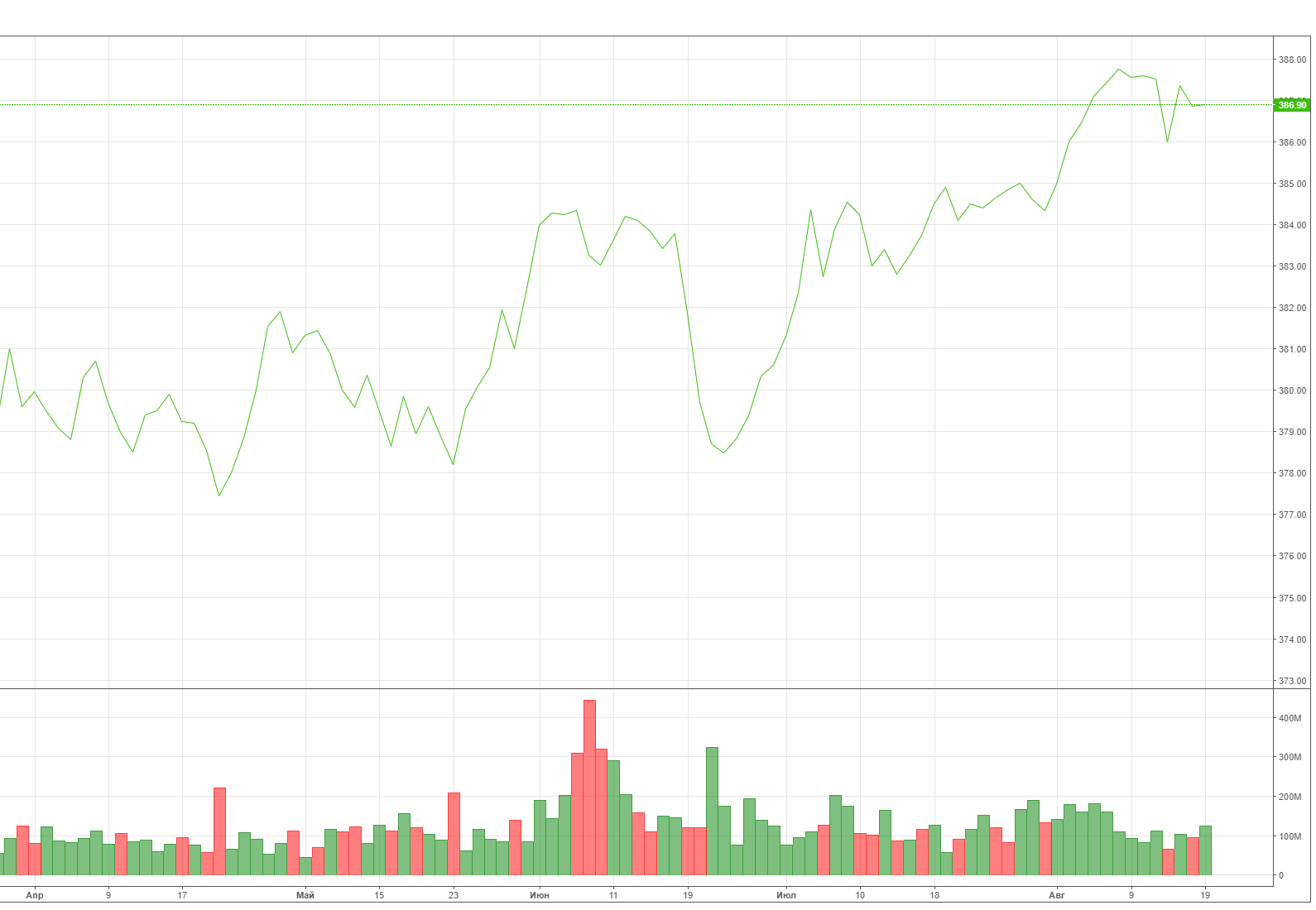
Для облегчения процедуры используют соотношения:
- 1 BPS = 0,01%;
- 10 BPS = 0,1%;
- 100 BPS = 1%;
- 1000 BPS = 10%;
- 10 000 BPS = 100%.
Например, доходность ценной бумаги составляет 20%. Если сообщают, что она выросла на 10%, идет ли речь о десятой доле от полной стоимости инструмента или о 10% от суммы доходности? В первом случае новое значение составит 30%, во втором – 22%.
Чтобы устранить разночтения и понять, сколько это получится в процентах, используют термин «базисный пункт». Если доходность инструмента возросла на 1000 BPS, новый показатель составит 30%. Если же рост составил 200 BPS, это обозначает 22%.
Интересные примеры подсчета
Понять, что такое базисный пункт, помогут простые примеры.
Нередко приходится слышать об изменении основной процентной ставки Центробанка РФ. Например, текущий показатель составляет 5%. Если ЦБ РФ поднимает ставку на 1 BPS, она будет равняться 5,01%. При росте на 10 BPS новый показатель будет равен 5,1%.
Другой пример – отношение курса доллара к евро изменилось на 50 пунктов, то есть на 0,5%. При этом важно не спутать понятие BPS с пунктами биржевой котировки. Последний термин означает не процентное соотношение, а абсолютную величину, то есть цену актива. Если котировка акции или валютной единицы изменилась на 2 пункта, речь идет о повышении или понижении последней цифры цены.
Почему инвесторы и аналитики используют BPS
При оценке доходности финансового инструмента инвесторы и аналитики используют понятие «кривая доходности». Так называется линия, отражающая изменение доходности ценной бумаги в зависимости от срока погашения. Для определения спреда берут показатель прибыльности долгосрочной бумаги и вычитают из него прибыльность краткосрочной. Кривизна линии зависит от полученной разницы.
Для оценки этих показателей и составления прогнозов аналитики и инвесторы используют базисный пункт. Например:
- На 15 января прибыльность 2-летних облигаций государственного займа составляет 2,5%, а 10-летних – 2,86%. Спред между показателями составит 36 BPS.
- На 22 января доходность составит 2,5% и 2,76%, кривая сгладится на 10 пунктов.
- Если прибыльность краткосрочных бумаг возрастает, возможна инверсия кривой.
Как правило, рентабельность долгосрочного выпуска выше, но количество возможных рисков больше.
Плюсы и минусы
Основной плюс применения на практике базисного пункта – это удобство подсчетов. Для большей простоты разработаны онлайн-калькуляторы для перевода единиц. В специальные окна вписываются цифры процентов и конвертируются в базисные пункты. Можно провести обратную математическую операцию. Это позволяет лучше понять, что такое базисный пункт и провести точные расчеты.
Кому это выгодно
Изменения процентных ставок в ту или иную сторону неизбежно влияют не только на депозиты отдельных инвесторов, но и на экономику в целом.
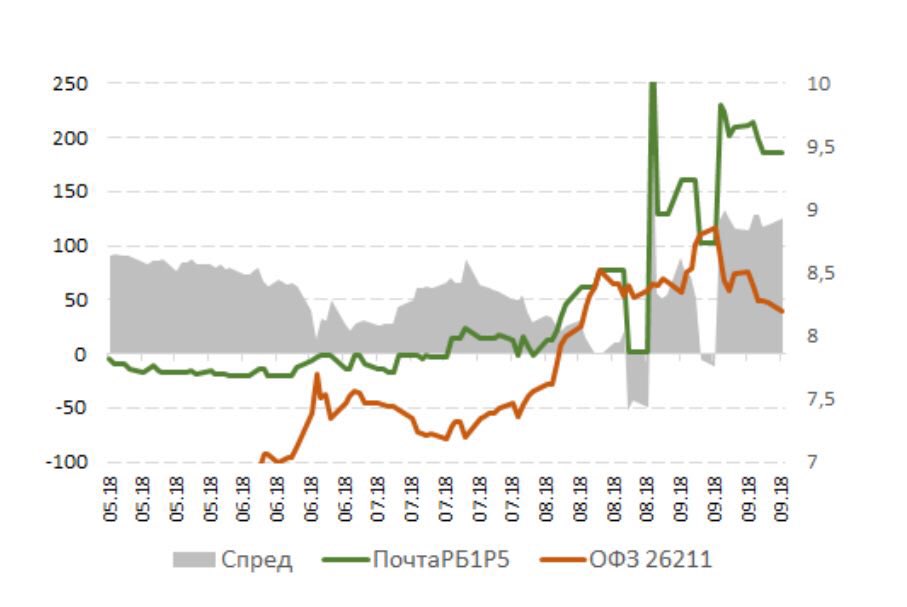
Средняя ставка ОФЗ
Сниженная ключевая ставка ЦБ позволяет:
- Коммерческим банкам брать и выдавать кредиты под более низкие проценты.
- Предприятиям получать «дешевые» займы для расширения производства.
- Населению приобретать дорогостоящие товары. В свою очередь, это положительно влияет на развитие бизнеса.
С другой стороны, растущий базисный пункт ключевой ставки вызывает подорожание импортных товаров и повышает закредитованность населения.
Повышение ставки в базисных пунктах приводит к росту процентов по потребительским вкладам и снижению уровня инфляции.