Cloudflare infinte loop (Checking if the site connection is secure)
What can I do to fix the CloudFlare "Checking if the site connection is secure" infinite loop?
I’m tying to load a website. The very first GET gets sent to an interstitial page run by Cloudflare that says
Checking if the site connection is secure
[site] needs to review the security of your connection before proceeding.
When the page first loads:
- first a spinning circle appears
- then the circle disappears
- then a reCAPTCHA-like grey table with a "challenge spinner" appears, but all it says is Verifying. with a green spinner. It stays like this for a long time, leaving me to twiddle my thumbs in frustration.
- then, finally, the "challenge spinner" disappears and another grey spinning circle appears
- then the page reloads completely, this time with a "challenge spinner" with a checkbox that says Verify you are human .
- I click the checkbox, and it changes back to the green spinner.
- Then the challenge spinner disappears
- Then a grey spinner appears
- Then the page reloads and I’m again presented with another "challenge spinner" that says Verify you are human .
- GOTO 6
I’m trying to access a website in TAILS (using Tor Browser, for security reasons). This issue occurs on a fresh boot. It should go without saying that I’m not doing anything malicious, but I’ll say it: all I’ve done is type the naked domain into the address bar and press <enter> .
Is this a bug? I’ve done this infinite loop for half an hour. How can I prove to CloudFlare that I’m human and escape this infinite loop?

2 Answers 2
On the internet, nobody knows how you look
The internet relies on a whole suite of protocols that work together. Just to name two, the TCP/IP dictates that you need an IP to get an answer at all, and HTTPS tells the port as well as how to encrypt the data between you and the server.
Now, the capcha service knows exactly one solid thing about you: Your IP. And now, let’s look at TOR browsers in the equitation:
On the most basic level, TOR browsers route their traffic from your computer to a special server, where the request is stored for a moment as that server does the same request to the actual server you want to talk to, but using that special server’s IP as "sender". And here things begin to unravel:
- A lot of captcha services check the IP of the sender against a list of known, bad IPs, that are used often by malicious people. That list includes the known part of the TOR network.
- TOR nodes share IP addresses between many users. If Bob and Alice both use the same node, Bob’s and Alice’s answers to the captcha are treated the same on the captcha side, resulting in the service recognizing it as failed or non-human activity. In fact, this can roll back to the point above: this is how IPs get blacklisted.
- TOR nodes take time to do stuff. This can lead to timeouts on the captcha service side and thus rejection of the answers.
- TOR’s setup requires to have the TOR node act as a "Man in the middle" on your communication with any server. This can result in encryption failures on HTTPS, resulting in server side rejection of messages.
This is not an exhaustive list of reasons the captcha answer is rejected, but just a glimpse under the hood of the technical side. To evade the loop of answers or connections being rejected, you might need to go without TOR so you can comply with the technical limitations. It might be possible to run through a different TOR node or VPN and get a connection that way, but you still might be experiencing problems with connection timeouts.
Ifa4 ipsecure ga что за сайт
Как отслеживать события в Google Analytics 4 и в чем отличия от Universal Analytics?
Ресурсы Universal Analytics прекратят обработку данных с 1 июля 2023 года. Поэтому мы решили начать разбирать GA4. В этой статье расскажем о настройке передачи событий.
В UA необходимо было настраивать передачу всех событий самостоятельно. Скрипт UA не передавал никаких событий по умолчанию. GA4 “из коробки” может передавать некоторые простейшие события
- В UA для отслеживания конверсий необходимо было настраивать цели. В GA4 нет целей. Нужно просто выбрать — является ли определенное событие конверсией или нет
Теперь пройдем процесс настройки специального события и увидим его в отчете GA4. Мы выбрали шаблон интернет-магазина в Tilda
Событием покупки в нем будет переход на URL /ga4-shop-success
В GA4 нет возможности создавать цели или события перехода на URL, как это было в UA. Поэтому в нашем случае переход на целевую страницу будет специальным событием.
Сначала идем в Google Tag Manager (GTM) для создание триггера на посещение URL и тега GA4, который будет фиксировать событие.
Триггер на посещение URL, содержащий “success”
Тег “Событие GA4”. Здесь мы заполнили название события и прописали для теста дополнительные параметры события:
Параметр “test_param”, передающий динамическое значение URL страницы, на которой выполнено событие
Параметр “test_param_2”, передающий значение order_2 при выполнении события
Теперь идем в GA4, меню “Конфигурация -> События” и создаем событие:
И указываем условия для события:
Параметр. В этой строке GA4 сам предложит выбрать параметр, по которому будем определять нужное нам событие. В нашем случае это название события, поэтому оставляем “event_name”
Галочку “Копировать параметры исходного события” оставляем, т.к. в этом событии мы будем передавать также пользовательские параметры и свойства
Чтобы получить пользовательские свойства, необходимо в меню “Конфигурация -> Специальные определения” создать специальные параметры. Все, что требуется берем из тега события GTM. Для параметров указываем область действия “Событие”, для свойств — “Пользователь”.
Далее нам надо выполнить действие на сайте и проверить его получение в GA4.
Теперь проверяем в отчете в реальном времени
Видим количество событий, конверсии (мы отметили это событие, как конверсию), и пользователей с заданным нами свойством test_user_1.
Но в этом отчете мы не видим наши спец параметры test_param и test_param2. Их сможем посмотреть только создав специальный отчет.
Идем в меню “Исследования” и создаем новый пустой отчет
И там находим динамические и постоянные параметры, которые задали событию в GTM.
Вот мы и настроили передачу события в GA4. Из преимуществ GA4 в работе с событиями выделим:
- Есть набор преднастроенных событий (первый визит, просмотр страницы, начало сессии, скролл, вовлечение пользователя) и встроенных параметров для них
В GTM при настройке тега можно задать произвольное количество собственных параметров, свойств, ценностей для любого события
Сделать событие конверсией для отчетов можно просто поставив галочку в настройках
Очень долгий и рутинный процесс настройки. В UA все было проще
В отчетах “Исследования” нельзя посмотреть данные за сегодняшний день
После недели работы и экспериментов с ним возникла полная солидарность с заграничными коллегами
Возникает непонимание многих моментов, которые в UA казались очевидными. GA4 в открытом доступе уже почти 2 года, но в базовых отчетах видим кривую верстку, наезд блоков и текста. Впрочем, это тема для отдельной статьи.
Пожалуйста, напишите Ваши впечатления о GA4 в комментариях. Если вас заинтересовал наш опыт с GA4, то также напишите об этом. Мы сможем подготовить еще несколько материалов об этом сервисе.
Приходят СМС от AUTHMSG об аутентификации: что это такое?
С сервиса приходят сообщения, содержащие сведения аутентификации, в том числе код подтверждения. Код требуется для входа в личный кабинет приложения или ресурса.
Аутентификация — процедура проверки подлинности пользователя путем сравнения вводимых данных, сверки электронной подписи или используя иной способ.
Во входящем сообщении содержится следующий текст:
- Код для проверки или активации номера.
- Код верификации заказа или виртуального ресурса.
- Содержатся цифры.
Иногда спам учащается ночью, когда пользователь не в состоянии отслеживать попытки взлома аккаунтов.
Как номер телефона оказывается в базе данных мошенников
Чаще всего в происходящем виноват сам пользователь:
- Размещает объявления на специализированных ресурсах.
- Указывает номер при регистрации на форуме или ресурсах, требующих авторизации СМС.
- Выкладывание данных на странице социальной сети. Есть приложения, предназначенные для выкачивания номеров в сети.

Как защититься
Главное правило — неразглашение конфиденциальной информации, в том числе телефона, при регистрации на ресурсах. Даже, если поступил звонок от представителя банка или сотрудника службы технической поддержки, не стоит им давать запрашиваемые сведения (логины, пароли и иную информацию, способную упростить доступ к денежным счетам).
Если оповещения приходят часто, стоит занести отправителя в ЧС, воспользовавшись встроенным функционалом устройства или специальными приложениями для блокирования нежелательных контактов.
Сбербанк потерял защиту сайта: объясняем, стоит ли ставить сертификат безопасности

С недавнего времени при заходе на сайт Сбербанка большинство пользователей стали видеть предупреждение о его небезопасности. Сам Сбер в качестве решения этой проблемы предлагает установку сертификатов Минцифры. Что это все значит и насколько безопасно пользоваться сайтом Сбербанка с такими сертификатами?
Что случилось с сайтом Сбера
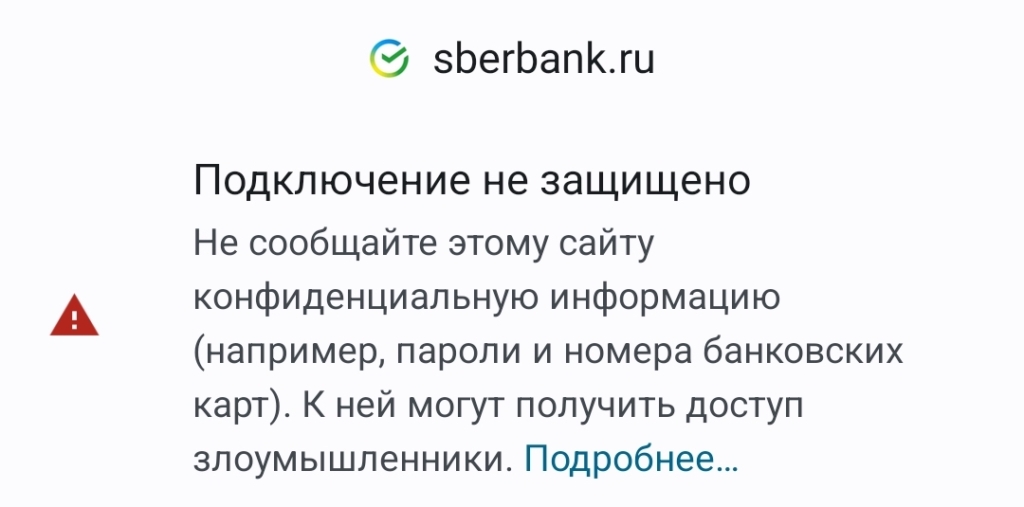
«Подключение не защищено. Не сообщайте этому сайту конфиденциальную информацию. Например, пароли и номера банковских карт. К ней могут получить доступ злоумышленники». Такой формулировкой описывает теперь сайт sberbank.ru самый популярный в интернете браузер Chrome. Но ведь именно чтобы ввести пароль и данные карт, мы на сайта Сбербанка и заходим! Поэтому предупреждение звучит крайне угрожающе. Так в чем же дело?
Немного краткой теории. Соединения с сайтами бывают двух основных видов: защищенное (начинается на https, см. в адресной строке) и незащищенное (начинается на http). Разница между ними простая: в первом случае данные шифруются, во втором — нет. Чем это грозит на практике?
Допустим, вы в кафе подключились к открытому Wi-Fi. Рядом сидит злоумышленник, который ловит ваш трафик — все то, чем вы обмениваетесь с интернетом (в случае с открытым Wi-Fi с этим справится и школьник). Что он увидит, если соединение зашифровано? Ничего. Максимум — IP-адреса сайтов. Но что вы там передаете и что смотрите, останется для него загадкой. Причем заглянуть в ваш трафик не сможет даже ваш провайдер. Куда трафик идет — видно, а что там внутри — нет.
Если же соединение не зашифровано, то злоумышленник будет видеть весь ваш трафик с этим сайтом как на ладони. И провайдер тоже.
Конечно, если точка доступа Wi-Fi закрытая (а значит, соединение само по себе закрыто от злоумышленника за соседним столиком) или вы вообще подключены по проводу, вероятность того, что провайдер будет лезть в ваш трафик и искать там пароли, крайне мала. Но гарантии безопасности уже нет. О чем браузер и предупреждает.
Но почему сайт Сбера отказался от защищенного соединения? Все дело снова в санкциях. Для шифрования трафика сайт должен иметь специальную вещь — сертификат безопасности. Это такой цифровой паспорт, который подтверждает, что трафик идет именно с того сайта, который вы запрашивали. Ваш браузер отправляет запрос: «Это точно сайт Сбера?» Тот отвечает: «Да, я точно сайт Сбера, вот мой пасп… сертификат!»
Но сертификаты (как и паспорта) не выдает кто попало. Это делают специальные удостоверяющие центры — аналоги паспортных столов. И в каждом устройстве/браузере зашит список центров, которым устройство/браузер доверяет. То есть наличие сертификата в конечном счете означает, что удостоверяющий центр, которому можно доверять, гарантирует: это тот самый сайт.

Вот тут и появилась проблема для попавшего под санкции госбанка. Доверенные удостоверяющие центры сплошь иностранные, да еще и из стран, которые российские власти называют недружественными. Отечественный сертификат Минцифры планировали включить в список доверенных, да не успели.
«Иностранные центры отказываются выдавать новые/продлевать старые SSL-сертификаты. Из „неприятности“ это превращается в реальную проблему. Срок действия многих ранее выданных сертификатов начинает истекать, и соединение перестает быть безопасным», — объясняет заместитель директора компании «Цифроматика» Артур Батуллин.
Сертификат Минцифры: спасение или новая опасность
Хотя… Выход, говорят госбанкиры, есть! Достаточно вручную указать устройству, что сертификату Минцифры можно доверять — и защищенное соединение снова заработает. Это называется «установка корневого сертификата», и именно это предлагает Сбер.
Однако если начать устанавливать корневой сертификат по инструкции, можно увидеть еще одно предупреждение безопасности. Это еще что?
Дело в том, что установка корневого сертификата в систему — это очень ответственный шаг, почти как вступление в брак. Вы даете разрешение сертификату подтверждать вообще всё. И это создает теоретическую возможность для расшифровки вашего трафика даже на сайтах, которые используют любые другие сертификаты.

Дмитрий Кузеванов, технический директор компании «Азбука Вкуса»:
— Важно понимать, что владелец корневого сертификата, которому вы доверяете, способен выпустить любой сертификат на имя любого сайта, и ваше устройство будет ему доверять и не выдавать никаких предупреждений.
И вот в этом моменте возможно злоупотребление — выпуск сертификата-двойника без ведома владельца ресурса и дальнейшее его использование в атаке «man-in-the-middle». Атакующий получает доступ для просмотра расшифрованного трафика между пользователем и сайтом, который может содержать: логины или пароли, тексты комментариев, любую другую конфиденциальную информацию.
Атака довольно сложная и, естественно, незаконная: для нее требуется, чтобы сам удостоверяющий центр Минцифры вдруг выдал поддельный сертификат для нужного сайта. Иначе не получится.

Дмитрий Гачко, основатель ГК ITglobal.com:
— Понятно, что можно злоупотребить, выдав сертификат, например, для YouTube, и ваш браузер не будет об этом сигнализировать, но злоупотребить может и любой другой из существующих владельцев корневых сертификатов. Пойдет ли кто-то на такой шаг и по какой причине — вот в чем вопрос.
Трафик с сайтов, которые используют сертификаты от Минцифры, расшифровать проще — надо только получить в этом поддержку самого Минцифры.
Как наиболее безопасно открыть сайт Сбера
Так что же делать-то? Не установишь сертификат Минцифры — соединение с сайтом Сбера станет небезопасным. Установишь — безопасность соединений с другими сайтами может нарушиться. Выход — использовать российский браузер, который сам по себе доверяет отечественным сертификатам. Нам известно о двух таких — «Яндекс.Браузер» от одноименной компании и «Атом» от VK.

Владимир Пузанов, директор бренда BQ:
— Глобально устанавливать любые корневые сертификаты небезопасно, независимо от страны происхождения. При этом национальные сертификаты используют общепринятую открытую криптографию и работают по стандартным правилам (это обычный RSA с длинным ключом, ровно такой же, какой выписывают другие центры сертификации). Если пользователь пользуется российскими браузерами, то дополнительно ничего устанавливать нет необходимости.
При этом разработчики «Яндекс.Браузера» уверяют, что допускают использование сертификата Минцифры только на сайтах из специального списка. То есть если «Яндекс.Браузер» увидит, что сертификатом Минцифры подписан, например, Google, то он все равно такой подписи доверять не станет. Можно просто использовать «Яндекс.Браузер» или «Атом» только на сайтах, которые подписаны Минцифрой, если сомневаетесь в этих российских разработках.
А вот перед владельцами iPhone дилеммы вообще не стоит: из-за ограничений системы у них браузеры могут доверять только корневым сертификатам из самой iOS. Так что вариант с российским браузером тут не поможет. Либо устанавливать корневой сертификат для Сбера в систему и учитывать все риски, либо пользоваться небезопасным соединением с онлайн-банком (и тоже учитывать все риски).
7 лучших бесплатных VPN-сервисов для компьютеров и смартфонов

Официальные сайты некоторых VPN‑сервисов могут работать нестабильно. Если у вас не получается перейти по ссылке и установить определённый вариант из списка, попробуйте другой.
1. Psiphon
Канадский VPN‑сервис, доступный на ПК и мобильных устройствах. Приложение выбирает регион сервера автоматически, но можно указать конкретную страну из трёх десятков вариантов.
В Psiphon используется сочетание нескольких технологий защищённой связи: VPN, SSH и HTTP‑прокси. Сервис маскирует трафик пользователя, шифрует его и скрывает источник. Исходный код доступен на GitHub.
Ограничений на количество трафика нет, но в бесплатной версии заявлена скорость до 2 Мбит/c. Для ускорения разработчики предлагают покупать внутреннюю валюту Psicash и оплачивать с её помощью premium‑доступ. Он действует от часа до месяца. Взять паузу не получится — время отсчитывается с момента активации, даже если вы отключите приложение.
Do not trust sites "scanning" your device for viruses from illegal websites
 Written by Tomas Meskauskas on September 11, 2023 (updated)
What is the «You’ve visited illegal infected website» scam?
«You’ve visited illegal infected website» is a scam disguised as a security alert from McAfee. It must be emphasized that this fake alert is in no way associated with the McAfee anti-virus or McAfee Corp.
Scams of this type usually endorse various untrustworthy apps, e.g., adware, browser hijackers, fake anti-virus tools, and other PUAs (Potentially Unwanted Applications). However, these schemes can also ask for bogus payments or trick victims into exposing sensitive information.
Scam-promoting websites are typically accessed via mistyped URLs or redirects caused by rogue pages, intrusive ads, or installed PUAs.
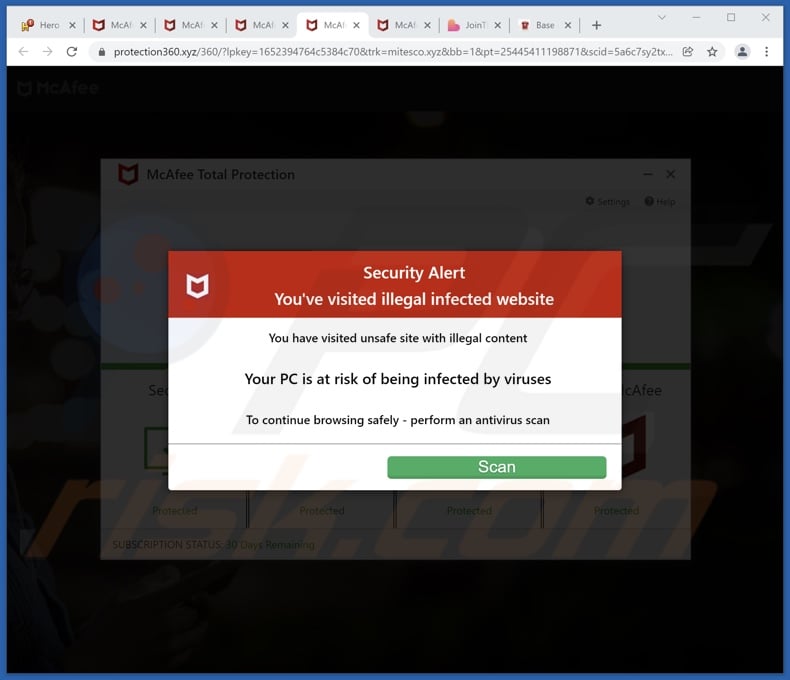
«You’ve visited illegal infected website» scam overview
The scam claims that users devices might have been infected when they visited a virulent website that hosts illegal content. To ensure their safety, users are urged to perform a system scan through the deceptive site. It must be stressed that no website can perform system scans or detect threats/issues. Therefore, any that make such claims — are scams.
Most scams like «You’ve visited illegal infected website» are designed to promote untrustworthy/harmful software. For example, they can push fake anti-viruses, adware, browser hijackers, and other PUAs. The presence of such software on systems endangers device integrity and user privacy.
In some cases, schemes of this kind also request victims to make various fake payments (e.g., subscription, registration, app purchase, etc.). Additionally, the scam may redirect users to dubious payment gateways, which can record entered data (e.g., personally identifiable information, credit card numbers, banking account details, etc.).
To summarize, by trusting the «You’ve visited illegal infected website» scam, users can experience system infections, severe privacy issues, financial losses, and even identity theft.
Should it be impossible to close a deceptive webpage, it can be done by ending the browser’s process with Windows Task Manager. Note that when the browser is reopened — the previous browsing session must not be restored, as that would open the scam site again.
To eliminate possible malware infections, scan your computer with legitimate antivirus software. Our security researchers recommend using Combo Cleaner.
▼ Download Combo Cleaner
To use full-featured product, you have to purchase a license for Combo Cleaner. 7 days free trial available. Combo Cleaner is owned and operated by Rcs Lt, the parent company of PCRisk.com read more.
Online scams in general
In fact, the Internet is rife with misleading, deceptive, and malicious content. Widespread scam models include — fake virus alerts, outdated/missing software notifications, hoax lotteries/raffles and giveaways, unbelievable offers and deals, etc.
Regardless of what schemes offer or how they operate — their sole goal is to generate revenue at victims’ expense. Therefore, it is crucial to exercise caution when browsing.
How did potentially unwanted applications install on my computer?
PUAs can have «official» promotional/download sites. Unwanted apps are also proliferated via downloaders/installers of other programs. This deceptive marketing method is called «bundling». Intrusive advertisements are used to spread PUAs as well. Upon being clicked, the adverts can execute scripts to make stealthy downloads/installations.
How to avoid installation of potentially unwanted applications?
It is recommended to research software and only download it from official and verified channels. Untrustworthy sources, e.g., unofficial and freeware sites, Peer-to-Peer sharing networks, etc. — often offer bundled content.
When downloading/installing, it is important to read terms, explore possible options, and use the «Custom/Advanced» settings to opt-out of all additions. Intrusive ads appear harmless yet redirect to highly questionable websites (e.g., gambling, pornography, etc.).
In case of encounters with such adverts/redirects, the system must be inspected and all suspicious applications and browser extensions/plug-ins detected — removed without delay. If your computer is already infected with PUAs, we recommend running a scan with Combo Cleaner Antivirus for Windows to automatically eliminate them.
Text presented in «You’ve visited illegal infected website» scam pop-up:
Security Alert
You’ve visited illegal infected website
You have visited unsafe site with illegal content
Your PC is at risk of being infected by viruses
To continue browsing safely — perform an antivirus scan
[Scan]
The appearance of «You’ve visited illegal infected website» pop-up scam (GIF):
Another example of «You’ve Visited Illegal Infected Website» pop-up scam:
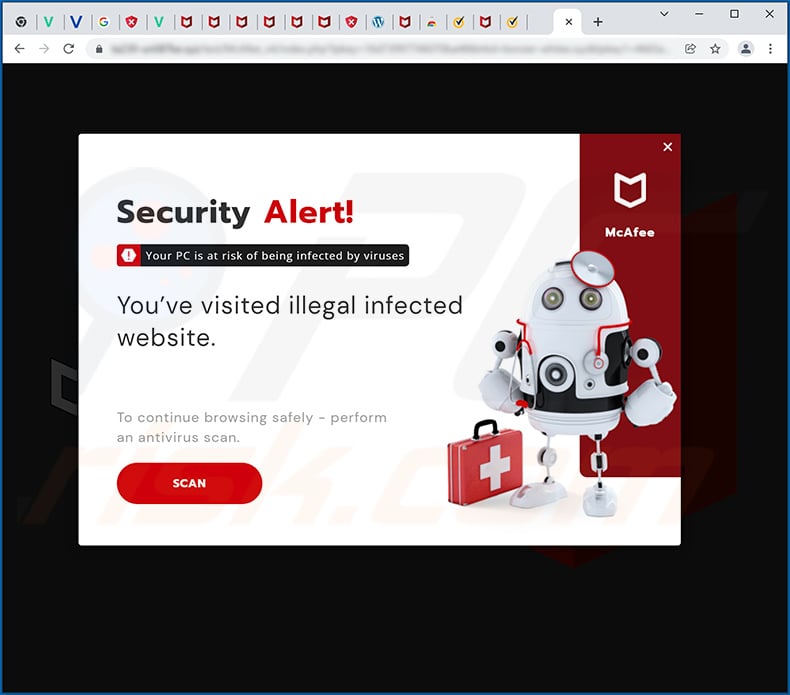
Yet another example of «You’ve Visited Illegal Infected Website» pop-up scam:
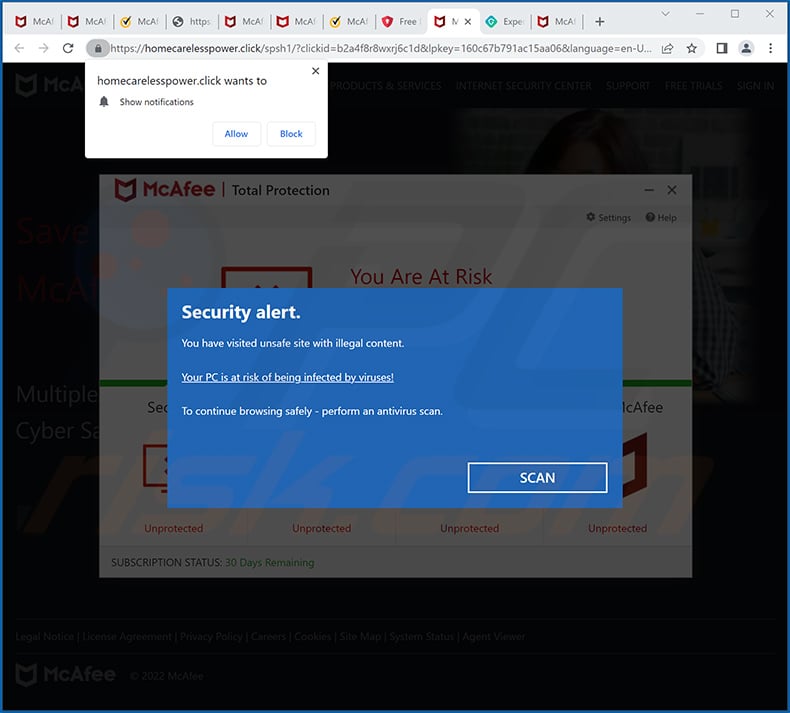
Text presented within:
Security alert.
You have visited unsafe site with illegal content.
Your PC is at risk of being infected by viruses!
To continue browsing safely — perform an antivirus scan.
Instant automatic malware removal: Manual threat removal might be a lengthy and complicated process that requires advanced IT skills. Combo Cleaner is a professional automatic malware removal tool that is recommended to get rid of malware. Download it by clicking the button below:
▼ DOWNLOAD Combo Cleaner By downloading any software listed on this website you agree to our Privacy Policy and Terms of Use. To use full-featured product, you have to purchase a license for Combo Cleaner. 7 days free trial available. Combo Cleaner is owned and operated by Rcs Lt, the parent company of PCRisk.com read more.
Quick menu:
How to identify a pop-up scam?
Pop-up windows with various fake messages are a common type of lures cybercriminals use. They collect sensitive personal data, trick Internet users into calling fake tech support numbers, subscribe to useless online services, invest in shady cryptocurrency schemes, etc.
While in the majority of cases these pop-ups don’t infect users’ devices with malware, they can cause direct monetary loss or could result in identity theft.
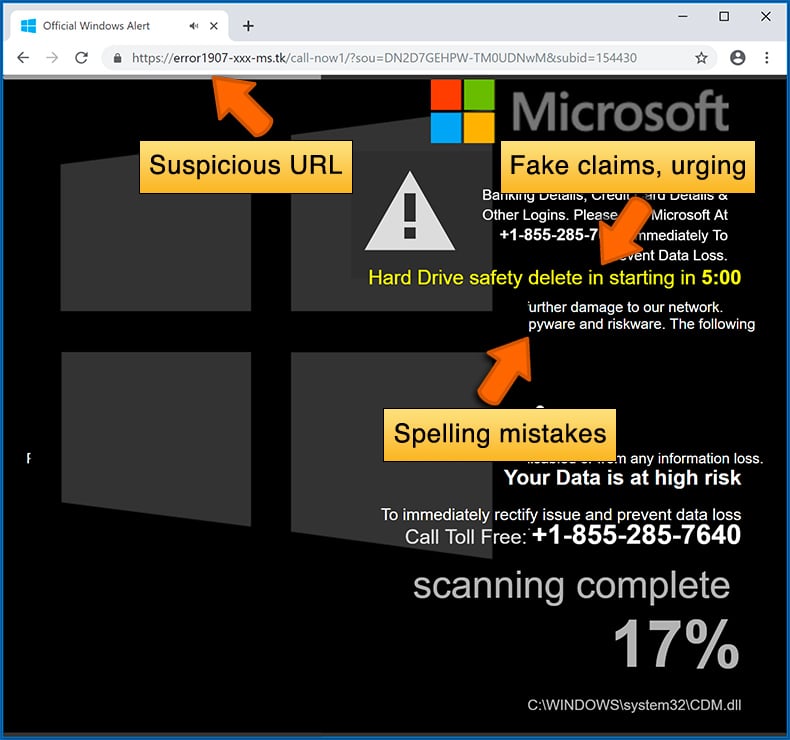
Cybercriminals strive to create their rogue pop-up windows to look trustworthy, however, scams typically have the following characteristics:
- Spelling mistakes and non-professional images — Closely inspect the information displayed in a pop-up. Spelling mistakes and unprofessional images could be a sign of a scam.
- Sense of urgency — Countdown timer with a couple of minutes on it, asking you to enter your personal information or subscribe to some online service.
- Statements that you won something — If you haven’t participated in a lottery, online competition, etc., and you see a pop-up window stating that you won.
- Computer or mobile device scan — A pop-up window that scans your device and informs of detected issues — is undoubtedly a scam; webpages cannot perform such actions.
- Exclusivity — Pop-up windows stating that only you are given secret access to a financial scheme that can quickly make you rich.
Example of a pop-up scam:
How do pop-up scams work?
Cybercriminals and deceptive marketers usually use various advertising networks, search engine poisoning techniques, and shady websites to generate traffic to their pop-ups. Users land on their online lures after clicking on fake download buttons, using a torrent website, or simply clicking on an Internet search engine result.
Based on users’ location and device information, they are presented with a scam pop-up. Lures presented in such pop-ups range from get-rich-quick schemes to fake virus scans.
How to remove fake pop-ups?
In most cases, pop-up scams do not infect users’ devices with malware. If you encountered a scam pop-up, simply closing it should be enough. In some cases scam, pop-ups may be hard to close; in such cases — close your Internet browser and restart it.
In extremely rare cases, you might need to reset your Internet browser. For this, use our instructions explaining how to reset Internet browser settings.
How to prevent fake pop-ups?
To prevent seeing pop-up scams, you should visit only reputable websites. Torrent, Crack, free online movie streaming, YouTube video download, and other websites of similar reputation commonly redirect Internet users to pop-up scams.
To minimize the risk of encountering pop-up scams, you should keep your Internet browsers up-to-date and use reputable anti-malware application. For this purpose, we recommend Combo Cleaner Antivirus for Windows.
What to do if you fell for a pop-up scam?
This depends on the type of scam that you fell for. Most commonly, pop-up scams try to trick users into sending money, giving away personal information, or giving access to one’s device.
- If you sent money to scammers: You should contact your financial institution and explain that you were scammed. If informed promptly, there’s a chance to get your money back.
- If you gave away your personal information: You should change your passwords and enable two-factor authentication in all online services that you use. Visit Federal Trade Commission to report identity theft and get personalized recovery steps.
- If you let scammers connect to your device: You should scan your computer with reputable anti-malware (we recommend Combo Cleaner Antivirus for Windows) — cyber criminals could have planted trojans, keyloggers, and other malware, don’t use your computer until removing possible threats.
- Help other Internet users: report Internet scams to Federal Trade Commission.
Frequently Asked Questions (FAQ)
What is a pop-up scam?
Pop-ups scams are deceptive messages aiming to lure/scare users into performing certain actions (e.g., making payments, downloading files, installing untrustworthy or malicious software, calling fake helplines, disclosing sensitive information, etc.).
What is the purpose of a pop-up scam?
Most pop-up scams aim only to generate revenue. Scammers can profit from deceptively obtained funds, sale or abuse of private data, software promotion, malware proliferation, and so forth.
Why do I encounter fake pop-ups?
Pop-up scams are promoted on suspect webpages, which are seldom accessed intentionally. Most users enter scam sites via mistyped URLs or redirects caused by browser notifications/ intrusive advertisements, rogue pages, or installed harmful software.
Will Combo Cleaner protect me from pop-up scams?
Combo Cleaner is capable of scanning the websites you visit and informing you if they are found to be rogue, deceptive, or malicious. Additionally, Combo Cleaner can restrict all further access to such sites.
About the author:

Tomas Meskauskas — expert security researcher, professional malware analyst.
I am passionate about computer security and technology. I have an experience of over 10 years working in various companies related to computer technical issue solving and Internet security. I have been working as an author and editor for pcrisk.com since 2010. Follow me on Twitter and LinkedIn to stay informed about the latest online security threats. Contact Tomas Meskauskas.
PCrisk security portal is brought by a company RCS LT. Joined forces of security researchers help educate computer users about the latest online security threats. More information about the company RCS LT.
Our malware removal guides are free. However, if you want to support us you can send us a donation.
PCrisk is a cyber security portal, informing Internet users about the latest digital threats. Our content is provided by security experts and professional malware researchers. Read more about us.
Ifa4 ipsecure ga что за сайт
All of your MX record, DNS, blacklist and SMTP diagnostics in one integrated tool. Input a domain name or IP Address or Host Name. Links in the results will guide you to other relevant tools and information. And you'll have a chronological history of your results.
If you already know exactly what you want, you can force a particular test or lookup. Try some of these examples:
(e.g. "blacklist: 127.0.0.2" will do a blacklist lookup)
| Command | Explanation | |
| blacklist: | Check IP or host for reputation | |
| smtp: | Test mail server SMTP (port 25) | |
| mx: | DNS MX records for domain | |
| a: | DNS A record IP address for host name | |
| spf: | Check SPF records on a domain | |
| txt: | Check TXT records on a domain | |
| ptr: | DNS PTR record for host name | |
| cname: | DNS canonical host name to IP address | |
| whois: | Get domain registration information | |
| arin: | Get IP address block information | |
| soa: | Get Start of Authority record for a domain | |
| tcp: | Verify an IP Address allows tcp connections | |
| http: | Verify a URL allows http connections | |
| https: | Verify a URL allows secure http connections | |
| ping: | Perform a standard ICMP ping | |
| trace: | Perform a standard ICMP trace route | |
| dns: | Check your DNS Servers for possible problems New! | |
| Other tools | ||
Feedback: If you run into any problems with the site or have an idea that you think would make it better, we would appreciate your feedback. Please leave us some Feedback.