M Baas
I am an E&E engineering PhD student at Stellenbosch University. I post about deep learning, electronics, and other things I find interesting.
Introduction to Bitcoin address formats
by Matthew Baas
An abridged taxonomy of the major bitcoin address formats and versions.
TL;DR: bitcoin (BTC) has been through several versions, and will doubtless go through more in the future. Different major bitcoin versions have different address formats. This post aims to document the common BTC address types encountered in common use as of Feb 2022, and is targeted at those who have a minimal understanding of bitcoin.
I will be assuming you have a basic idea of what bitcoin is, and just about nothing else :). For those already well experienced in BTC and its technical components, this might be of less use to you.
Update 2022-03-20: changed name of wrapped segwit to script hash addresses (BIP-13). This is done to better indicate that this address format can encode the hash of any arbitrary script, not just wrapping segregated witness.
1. Bitcoin overview
Before the taxonomy, a brief reminder of the key parts of bitcoin are appropriate.
The Bitcoin (BTC or just btc) blockchain is fundamentally a record of transactions between btc addresses. By looking at all transactions involving a given BTC address, we can determine the balance of that address. This means that an amount of bitcoin is owned by a BTC address on the BTC blockchain.
However, a single ‘wallet’ in common software wallets these days can correspond to many different addresses. The total value of that wallet is the sum of balances of all the addresses contained in that wallet (just like how in real life a single wallet can have multiple cards in it).
Changes to bitcoin: BIPs
The original version of the bitcoin protocol and software released over a decade ago has undergone significant upgrades and bug fixes. Upgrades, or improvements to bitcoin are formally proposed as Bitcoin Improvement Proposals (BIPs). They have a formal format, a formal lifecycle, and are typically reviewed many times by multiple people before miners consider adopting the BIP.
For example, BIP-32 is an upgrade for introducing a feature called Hierarchical Deterministic Wallets. Some BIPs are minor bugfixes and usability improvements, while others are fairly large updates which introduce swathes of new functionality. Each BIP is only ‘active’ (i.e. in effect on the main BTC blockchain) if the majority of miners agree to run software that implements that BIP. As of Jan 2022 there are 43 BIPs which are in effect – the ‘final’ state of an accepted BIP.
Unique to BTC: all BIPs should be backwards compatible. That is to say, the very first bitcoins should still be spendable using the original methods, and the main functionality that worked in previous versions must still work in the latest version.
Other cryptocurrencies often do not have this feature, where failing to update wallet software to the latest version of the cryptocurrency’s protocol will render your funds unusable. Such a design guideline has its benefits and drawbacks: you can always be confident that you can spend your funds, even if it is your own hand-written wallet software from a decade ago. However, this comes at the cost of major version bloat, where all future BIPs and wallet software code must have special hooks and workarounds to make sure both the latest and all previous versions work as intended.
The nature of BTC improvements
The major BIPs have changed the BTC blockchain so that the blockchain still contains a list of transactions, however nowadays the information that can be included in a transaction has expanded substantially.
Transactions can have many receiving and sending addresses within them along with other metadata. They can also require approval from owners of multiple BTC addresses, and various other functionality – e.g. only being spendable after a certain amount of time.
However, since all BIPs are backwards compatible, new addresses created using software implementing newer BIPs have different forms to let BTC nodes and miners know that the address and its format corresponds to the newer BTC protocol version. This is necessary so that old addresses are not handled as if they support newer features – part of ensuring backwards compatibility.
2. BTC address taxonomy
Note: the example addresses used below are just examples I grabbed of the internet, not mine and I don’t know where they come from. DO NOT SEND ANY FUNDS TO THESE EXAMPLE ADDRESSES.
Here is a list of the types of addresses you will commonly see while using bitcoin:
| Address version | Example | Description | Payment type |
|---|---|---|---|
| Legacy | 1 5e15hWo6CShMgbAfo8c2Ykj4C6BLq6Not | Oldest bitcoin version. Always start with a 1 . | P2PKH |
| Script hash addresses (BIP-13) | 3 5PBEaofpUeH8VnnNSorM1QZsadrZoQp4N | 2nd major address version. Always start with a 3 . | P2SH |
| Native Segwit | bc1q 42lja79elem0anu8q8s3h2n687re9jax556pcc | 3rd major address version. Always start with bc1q . Current standard. | P2WPKH |
| Lightning Network | lnbc 2500u1pvjluezsp5zyg3zyg3zyg3zyg3zyg3zyg3zyg3zyg3zyg3zyg3zyg3zyg3zygspp5qqqsyqcyq5rqwzqfqqqsyqcyq5rqwzqfqqqsyqcyq5rqwzqfqypqdq5xysxxatsyp3k7enxv4jsxqzpu9qrsgquk0rl77nj30yxdy8j9vdx85fkpmdla2087ne0xh8nhedh8w27kyke0lp53ut353s06fv3qfegext0eh0ymjpf39tuven09sam30g4vgpfna3rh | BTC’s 2nd layer off-chain payment protocol. Always start with lnbc . | LN |
| Taproot (segwit v1) | bc1p mzfrwwndsqmk5yh69yjr5lfgfg4ev8c0tsc06e | 4th major address version. Always start with bc1p . Upcoming standard. | P2TR |
I will now give a brief overview of the different types of wallets associated with each major address version, except for lightning network, since that is not on the main btc blockchain and I don’t know enough about it. Also, what follows is my current best understanding of each address technology, and may not be fully correct from here onwards. For the best information on them, consult the source BIPs on the bitcoin github, and the bitcoin node software.
2.1 Legacy
The legacy address is made from a pair of (private key, public key) , and the address is simply a hash of the public key using the private key with some cryptography. The result of this hash is something like 1 5e15hWo6CShMgbAfo8c2Ykj4C6BLq6Not
This is why legacy payments are also referred to as Pay-to-Public-Key-Hash (P2PKH), as you are literally paying to a hash of the public key of the target wallet.
You can spend from the address so long as you can prove (using cryptography) that you have the private key corresponding to the address (hashed public key).
2.2 Script hash addresses (aka wrapped segwit)
Script hash addresses (defined in BIP-13), sometimes known as wrapped segwit addresses, are made, very roughly speaking, from a tuple (private key, public key, script) . The address is the hash of a script that involves certain spending conditions.
Such spending conditions can be simple: e.g. showing the private key associated with public key allows you to spend this bitcoin’
Or they can be complex: e.g. showing the private key associated with this public key allows you to spend this bitcoin after 27 days if you also reveal a predetermined secret number.
The script of these conditions is then hashed using the private key to obtain the address. e.g. 3 5PBEaofpUeH8VnnNSorM1QZsadrZoQp4N . And this is why script hash addresses (aka wrapped segwit) is known as Pay-to-Script-Hash (P2SH). To spend from an address you must have the private key, script, and satisfy the requirements of the script.
2.3 Native Segwit
Wallets in this version are defined, again very roughly speaking, by a pair (seed phrase, pass phrase, tree structure, script) . To get an address, we essentially compute a hash based on the seed phrase, pass phrase and a particular path within the tree structure, providing us with a hashed public key to send BTC to. When transactions are broadcast to the blockchain, a hash of the script is included in a separate part of the transaction called the ‘witness’. Spending from any segwit or newer addresses requires satisfying the script requirements specified by the witness.
Hence, we call it Pay-to-Witness-Public-Key-Hash (P2WPKH) because the address is a hash of the public key and witness pair. If a script is used (e.g. for multi-sig wallets) then it is also known as Pay-to-Witness-Script-Hash (P2WSH). The seed and pass phrase in the tuple above can also instead be specified by an extended public and extended private key, and internally the seed and pass phrase are used to generate the extended public and private keys in wallet software.
- Seed phrase: “wild quiz always market robust … twist divert margin route”
- Pass phrase: “” (blank is default)
- Path within tree structure: “m/0/0/2’” ; the path is often in format of “m/
’/ ’/ ’”, but can be somewhat arbitrary. Each directory name is an integer (i.e account can be ‘0124’, but not ‘abcd’)
Then the derived address will be some series of cryptographic functions that takes these items as input, yielding an address like bc1q 42lja79elem0anu8q8s3h2n687re9jax556pcc
2.4 Taproot
With taproot, a now released but not yet widely used version of the BTC protocol, addresses can be formulated in significantly more ways. Concretely, like native segwit, a wallet can consists of a seed phrase and a pass phrase. These are used to generate an extended public and private key, which are used to derive the addresses at arbitrary paths in a hierarchically deterministic wallet.
However, now with taproot, there is one more thing that can be added to generate an address – taptweak s. A taptweak – fundamentally a natural number – is added at an intermediary step to the native segwit tuple to yield a new public key and thus address. Arbitrary bitcoin scripts can then be encoded into a taptweak and thus into an address. This, combined with the script and metadata added to the ‘witness’ part of the address in any transaction, provides the necessary functionality for various new taproot features.
These taptweak s have some special mathematical properties that allow for various interesting functionality, such as having a binary tree of different scripts committed to the same address, allowing one to spend from that address if they can satisfy a script at some path in the tree. Taproot also introduced musig , which allows for multi-sig wallets to be constructed with what is essentially a taptweak , thereby making multi-sig wallets indistinguishable from regular wallets on the blockchain.
Example
Let us look at a single example of a transaction I found from browsing blockchain.com. Below is an example of an actual address clearly used by some whale or exchange:

We can see that the address – from its format – is a native segwit (segwit v0) address using a non-trivial script in the witness (P2WSH). Recalling that BTC is fundamentally owned by an address and not a wallet, we can also observe the whale nature of the address: tallying all its transactions yields the final balance belonging to this address at over 2930 BTC!

Next lets look at a transaction it is in:
In this example transaction, the segwit address above is sending funds to six output BTC addresses from various versions. I have highlighted the version of each address with colors as used in the table earlier for clarity. Such a transaction highlights how backwards compatible and interoperable BTC is – a single transaction can involve inputs and outputs from differing versions of the BTC protocol, all without problem.
Summary
I hope you found this post valuable, and as always, if you spot things I am mistaken on, please get in contact with me via the About page. I will continue to update the list above if/when new major BTC versions and address formats are released.
What is a Bitcoin address.
Ever wonder what all those letters and numbers really mean? This is an introduction to what a Bitcoin addresses are and how they work.


Here’s a random Bitcoin Address:
As you can see is a mix of numbers and letters beginning with the digit “1” (If you see a Bitcoin address not starting with “1” it may well be a new Bitcoin address generated with Segwit layer into mind — but that’s another blog post). This is the string which users send to each other in order to receive and send Bitcoin. A Bitcoin address can represent a person or something else, like a payment script (P2SH). The Bitcoin address can also be represented with a QR Code in order to make it easier to users to copy paste the value. If you’re wondering how this random string is generated keep reading!
First, we need to understand what the Public/Private Key Asymmetric Cryptographic method is and how it works.
Public key cryptography is a mathematical foundation for computer and information security. It’s a pair of keys, a private and a public one. The private key is picked randomly (more on this later) and the public key is derived from the private. In Bitcoin, the public key is used to receive funds and the private key is used to sign transactions.
How does this work for Bitcoin?
A Bitcoin user can send to another in a transaction an amount of Bitcoin and “sign” this transaction with their own private key and give his or her public key as well. Now this signature can be validated against the public key by anyone on the network (without revealing the private key) in order to check if the sender has the “right” to “spend” this amount of Bitcoin at that moment of time.
In summary, someone with the private key can sign a transaction uniquely and anyone with the public key can verify that the signature comes from someone that is the owner of the private key.
Note: for privacy and security reasons the signatures for a transaction are different each time but created from the same private key.
The relationship between the private and public key is based on a “one-way” mathematical function that is irreversible, which means that given an input you come up with an output and you cannot find the original input with the current output. Bitcoin uses the elliptic curves multiplication as the basis of its cryptography for generating secure public keys.
Once we have the public key, then we can generate the Bitcoin address by applying a one-way cryptographic Hash function to the public key.
It’s important to notice that there’s is no way of finding the private key with the public key nor the public key with the Bitcoin address.
Finding the Private Key
Private key in Bitcoin is just a number picked randomly between 1 and 2256, how the number is found in that range is up to the software developer. The only thing we have to take into account is that the source of randomness must have enough entropy to not be predictable or repeatable. It’s not recommended as developers to write their own random number generator nor use the programming language functions provided for this. Instead you can use a secure pseudorandom number generator that is cryptographically secure with a seed from a source of sufficient entropy.
Funny fact: If a Bitcoin address comes from a private key that can “only” be a number between 1 and 2^256, would we run out of address one day? Well, first you have to get a picture of how big 2^256 is. It is immensely ridiculous, for comparison, it is approximately 10^77 in decimal and the visible universe is estimated to contain 10^80 particules, so it’s probably safe to say that we won’t run out of bitcoin addresses. Certain calculations say that there’s approximately 1 Public address available for every 64 atoms on this planet.
Elliptic Curve Multiplication and Public Key
The mathematics behind elliptic curve multiplication is outside of the scope of this article, so we’ll just assume that applying this “one way function” over the private key we get our public key.
In this link, you will find a Bitcoin address generator, this web page asks you to move the pointer around in order to generate sufficient randomness to pick the private key, and then generates the public key and the Bitcoin address.
From Public Key to Bitcoin Address
How do we get from the Public key to the Bitcoin Address? We get it by applying a “one way hashing function” to the public key. Tired of hearing about “hashing”? Get use to! Hashing function are used all over Bitcoin and blockchain technologies (Bitcoin addresses, script addresses, Proof of work mining, etc.). In Bitcoin, the two hashing functions used for generating the btc address are the “Secure Hash Algorithm” (SHA) and the RACE Integrity Primitives Evaluation Message Digest (RIPEMD), specifically SHA256 and RIPEMD160.
So first, we hash with SHA256 the public key, and then the result is hashed again with the RIPEMD160.
The result, is the Bitcoin address, but wait!
Because there’s one more step in the process! Ha! We need to encode the resulting string as “Base58”. So what is “Base58” you might be wondering. It is a text based binary-encoding format that was developed for bitcoin use specifically, and the main objective of it is make the Bitcoin address more “human-readable” by excluding some characters that might be confusing, like the 0 (number zero), O (capital o), l (lower l), I (capital i) and the symbols “+” and “/”.
An extra layer of security is placed on the resulting Base58 string in order to prevent typos or transcription errors. Base58Check is another encoding format that has a built-in error checking code. This code is just 4 bytes added to the end of the data. The main use case of the Base58Check is to prevent sending Bitcoin to an invalid addresses. The Bitcoin wallet when presented with the Base58Check string, it will calculate the checksum of the data and compare to the checksum included in the code. If they match, it’s a valid address, if don’t the address is not valid.
So guys, I hope that you learned something new about Bitcoin, if you have any question or suggestion just leave a comment, I’d be happy to answer.
Адрес биткоин-кошелька: где взять, как создать, узнать и получить на него криптовалюту
 Автор Редакция Profinvestment
 Проверено экспертом Сергей Воробей Обновлено Авг 13, 2023
Популярность биткоина растет, а вместе с тем увеличивается и количество желающих приобрести ценную криптовалюту. К сожалению, нельзя просто взять деньги, сходить в банк и купить Bitcoin. Поэтому у новичков часто возникают разного рода вопросы по этому поводу, которые требуют разъяснения.
В статье эксперты Profinvestment рассказали, что такое адрес биткоин-кошелька, где его взять, как получить и узнать всю информацию о нем. В процессе написания основывались на общедоступных данных и собственном обширном опыте работе с криптовалютами.
Биткоин-адрес нужен для получения и перевода криптовалюты на кошелек. Например, его необходимо указывать при покупке BTC в онлайн-обменниках или при выводе монет с криптовалютной биржи. Состоят биткоин-адреса из случайного набора букв латинского алфавита и цифр (обычно длина 33–35 символов).
Такой адрес называется публичным. Генерируется он из приватного ключа. Получить адрес может каждый бесплатно, но необходимо первым делом создать кошелек для хранения криптовалюты BTC. Сделать это можно на биржах, онлайн-сервисах, используя локальные приложения на компьютере или мобильном устройстве и т.д. Ниже об этом расскажем подробнее и покажем на примере, где посмотреть и как выглядит адрес биткоин.
КОРОТКО О ГЛАВНОМ
- Биткоин адрес – уникальная комбинацию букв и цифр, которая используется для отправки и получения монет BTC пользователями сети.
- Адрес можно получить, создав аккаунт на бирже криптовалют или скачав кошелек на компьютер/мобильное устройство. В процессе создания кошелек самостоятельно генерирует приватный и публичный ключи, а также адрес для пополнения.
- Чтобы получить криптовалюту на биткоин адрес, необходимо передать его отправителю, который отправит монеты, или указать его для вывода с биржи, обменника. другого сервиса.
- Можно проверить баланс и историю транзакций любого биткоин-адреса, используя специальные сервисы (обозреватели).
- Биткоин адреса бывают трех разных видов – начинаются на 1, на 3 или на bc1. Все они имеют схожий функционал, но разные кошельки могут поддерживать разные форматы.
Купить/продать биткоин можно через:
Начнем с того, как создать кошелек, позволяющий получить биткоин-адрес. А потом перейдем к тому, как использовать этот адрес для приобретения монет.
Форматы BTC-адресов и как они выглядят
Для отправки и получения биткоинов обязательно нужен адрес длиной 26-35 цифр и букв. Любой адрес можно использовать для перевода криптовалюты в сети, однако есть одно условие: программное обеспечение кошелька отправителя должно поддерживать выбранный формат адреса.
Существует три формата Bitcoin-адресов:
- P2PKH. Начинается на 1. Пример – 1BvBMSEYstWetqTFn5Au4m4GFg7xJaNVN2. Это оригинальный формат адресов, который до сих пор активно используется. P2PKH расшифровывается как Pay-to-Pubkey-Hash, то есть «плата за хэш открытого ключа получателя».
- P2SH. Начинается на 3. Пример – 3J98t1WpEZ73CNmQviecrnyiWrnqRhWNLy. Расшифровывается как Pay to Script Hash («плата за хэш скрипта»), обеспечивает более широкую функциональность, чем оригинальные адреса. Например, дает возможность работать с мультиподписями, совместим с обновлением SegWit дл повышения масштабируемости протокола.
- Bech32. Начинается на bc1. Пример – bc1qm6fuugf70v3ehhrrctl5qq3lf28h3sm9vmd0r7. Собственный формат адресов SegWit. Его поддерживает большинство программных и аппаратных кошельков, но далеко не все биржи. В настоящее время лишь несколько процентов BTC хранится на адресах Bech32адреса, хотя это число постепенно растет.
Оптимальным выбором для большинства пользователей считается второй вариант, так как он сочетает в себе функциональность и повсеместную поддержку всеми сервисами.
Как создать кошелек для хранения Bitcoin
Существует несколько способов хранения биткоинов, каждый обладает своими достоинствами и недостатками.
На бирже
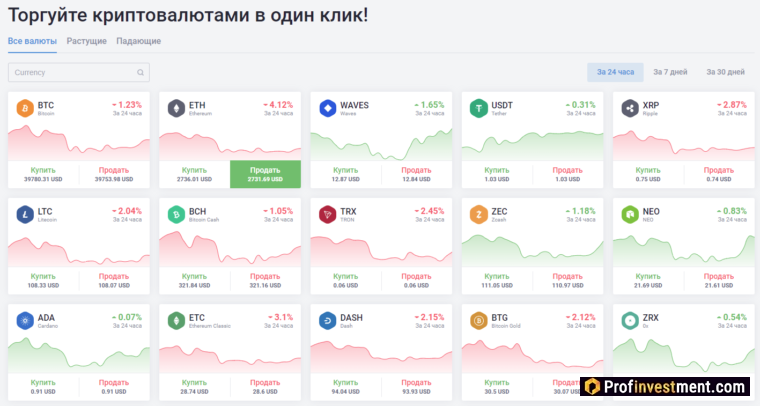
Биткоин-биржа EXMO
Самый простой способ — это создать кошелек для биткоин на криптобирже, на которой можно быстро купить или продать криптовалюту.
На биржах можно купить, продать, обменять криптовалюту, при этом будет сформирован кошелек, где легко хранить виртуальные монеты.
Регистрация стандартная, нужно указать свой почтовый ящик и придумать пароль, обязательно подтвердив адрес электронной почты (после регистрации на него придет письмо от биржи, в котором будет находиться ссылка, по которой нужно пройти). Зайдя в личный кабинет, необходимо задать настройки безопасности, подключить 2fa-аутентификацию и получать коды на вход по SMS или в приложении «Google authenticator».
Как правило, требуется также проходить верификацию на бирже. Она подразумевает предоставление паспортных данных, подтверждение личности и адреса проживания. Эта мера направлена против отмывания денег и других финансовых преступлений.
После этого можно заводить деньги на баланс и покупать Bitcoin, Ethereum, Ripple, Litecoin и другие популярные криптовалюты.
Локальный кошелек на компьютер или на телефон
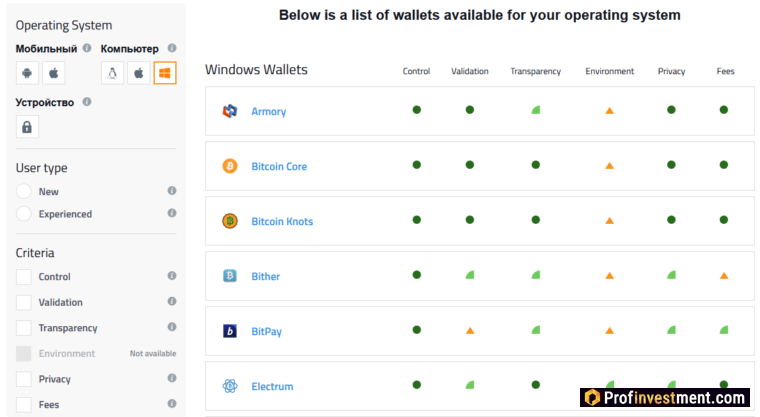
Кошельки для Bitcoin
Скачать его можно с сайта bitcoin.org. Популярными кошельками являются Exodus, Jaxx, Lumi, Trust Wallet, Atomic и т. д.
В данном случае кошелек установится на компьютер или телефон. На выбор предложено несколько приложений от разных разработчиков. Все бумажники делятся на «тяжелые» (требуется загрузить весь блокчейн) и «легкие» (синхронизация с сетью происходит онлайн). Например, «тяжелый» — Bitcoin Core, «легкий» — Electrum.
При установке программы-кошелька Bitcoin Core сразу нужно позаботиться о наличии свободного места на диске компьютера, так как после ее запуска запускается синхронизация программы с сетью, в ходе которой происходит скачивание блоков всех транзакций за все время существования. В итоге будет закачано около 400 Гбайт информации, поэтому займет данный процесс не один час.
Пользоваться им несложно, но обязательно нужно делать резервные копии после каждой операции с новым кошельком для восстановления в случае удаления программы (перейдя в раздел «Обзор»).
Как альтернатива, можно использовать программу Electrum. Она не требует загрузки блокчейна сети Bitcoin и достаточна надежна. Буквально через 5–10 минут можно получать и отправлять криптовалюту. При установке важно не забыть сохранить seed-фразу из 12 слов на английском языке (для восстановления доступа), а также приватные ключи для переноса на другие кошельки.
Можно скачать программы других разработчиков, не представленных на данном сайте, например, Jaxx — это популярный мультикриптовалютный клиент для хранения не только BTC, а и других криптовалют. Преимуществом является то, что скачивать все блоки не придется, но для работы нужен постоянный доступ к интернету.
Онлайн-сервисы
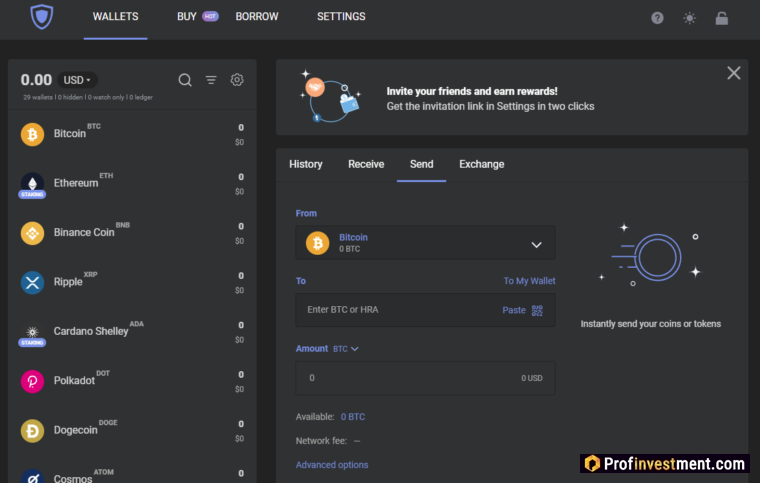
Guarda
Например, Blockchain.com, Luno, Guarda, Coinfy и другие сайты.
Достаточно просто пройти регистрацию, чтобы получить готовый кошелек, на который можно переводить криптовалюту. Понятно, что в данном случае загружать на компьютер всю цепочку блоков не придется. Аккаунтов можно создать несколько, меняя только электронную почту при регистрации.
Особое внимание нужно уделить настройкам безопасности. Для этого лучше использовать сложные пароли; подключить двухфакторную аутентификацию 2fa; создать почту для регистрации на надежном сервисе (лучше всего от Google — Gmail); поставить и обновлять антивирус и т. д. А пароли, логины, seed записать и хранить в надежном месте, не сообщая их посторонним людям.
Бумажный кошелек
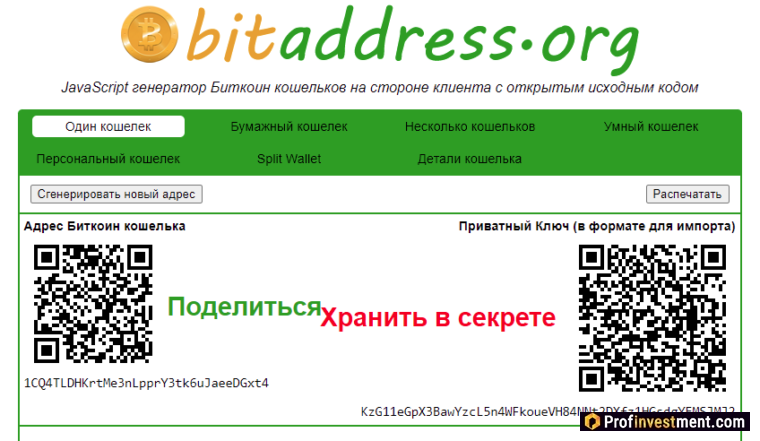
Бумажный Bitcoin-кошелек
Сайт bitaddress.org позволяет сгенерировать два ключа — приватный и публичный, а потом распечатать их и хранить в оффлайн-режиме, где они полностью защищены от хакерских атак. Пополнять такой кошелек можно свободно, зная адрес, а вот выводить средства уже сложнее, нужно подключаться к программному кошельку.
Вариант хорош для долгосрочного инвестирования, когда вы не планируете пользоваться криптовалютой несколько месяцев или лет. Важно предохранить бумагу от порчи — заламинировать, хранить в металлическом сейфе или коробке, чтобы ее не могли уничтожить влага и огонь.
Аппаратный кошелек

Ledger Nano X
Аппаратные кошельки — Ledger, Trezor, Keepkey, SafePal и т.д. — как и бумажные, хранят ключи изолированно от интернета, пока пользователю не понадобится сделать транзакцию. Но в сравнении с бумажными, они удобнее для использования. Многие модели сделаны водонепроницаемыми. А главное — даже если кошелек утерян, то из-за пин-кода нашедший не сможет получить доступ к средствам.
При использовании любого способа важно уделить внимание безопасности данных, особенно хранению приватного ключа.
Адрес биткоин-кошелька: что это и где взять
Адрес биткоин-кошелька — это произвольный набор цифр и символов латинского алфавита (длина около 33–34 знаков). Создается он сразу после регистрации аккаунта на онлайн-сервисах или после установки программы-клиента. Для каждой новой операции он может генерироваться заново, но все старые тоже остаются рабочими. Нужно внимательно относиться к копированию адреса биткоин при переводе, чтобы не пропустить какой-нибудь символ (транзакции в блокчейне нельзя отменить).
Приведем примеры, как и где можно найти свой Bitcoin Address:
- При регистрации на бирже Exmo в разделе «Кошелек» нажать в строке BTC кнопку «Пополнить» напротив BTC. Там будет адрес биткоин-кошелька для пополнения его на бирже exmo.me (минимальная сумма — 0,001 BTC). Он постоянный, нет возможности генерировать новые:
- На бирже LocalBitcoins — перейти в «Кошелек», нажать «Получить биткоины» и посмотреть адрес. Минимальная сумма отсутствует, комиссия меняется в зависимости от того, насколько загружена биткоин-сеть.

- В онлайн-кошельке Blockchain нажать «Получить» (на англ. Request). В настройках можно создать новый Bitcoin Address:
- В программе Bitcoin Core найти биткоин-адреса можно в разделе «Получить».
Как купить и получить Bitcoin на адрес кошелька
Основные способы, как получить биткоины:
Биржи криптовалют
Площадки для покупки и продажи монет. Наиболее известные криптобиржи, которые работают с фиатом (традиционными валютами): Binance, Bybit, Currency.com, OKX, Huobi, EXMO, MEXC.
Зачастую платформы предлагают несколько разных способов покупки — создание ордеров в торговом терминале, быстрая конвертация по рыночной цене, p2p-сделки, покупка напрямую с банковской карты, децентрализованные свопы и так далее.

покупка BTC на EXMO
Обменники
Второй способ — обменять имеющуюся валюту (рубли, доллары, евро, гривны и другие) на Bitcoin в обменниках.
Так, обменник Prostocash осуществляет надежный, круглосуточный обмен по лучшему курсу. Обмен проводится практически с любыми электронными платежными системами (ЮМани, Киви, Адвакеш, Payeer, Perfect Money и другие); работает в направлении российских банков (Сбербанк, Россельхозбанк, ВТБ 24, Альфа-Банк, Русский Стандарт, Тинькофф).
Отзывы положительные, например, в мониторинге Kurs-expert:
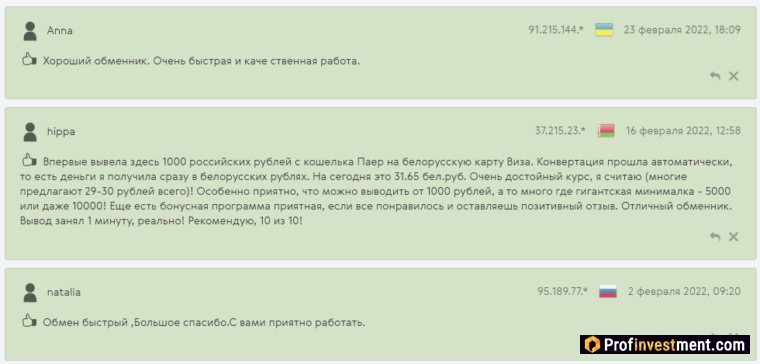
отзывы о Prostocash
Например, чтобы купить биткоины за рубли, достаточно выбрать направление «Сбербанк» на «Bitcoin» и сумму:

покупка биткоин с помощью обменника Prostocash
Потом указать детали обмена: информацию по банковской карте и адрес кошелька для получения биткоина. Нажать «Обменять» и получить инструкцию по оплате. Если есть вопросы, следует обратиться в онлайн-чат поддержки обменника электронных денег.
После подтверждения операции в сети криптовалюта придет на адрес кошелька Bitcoin, который указан. Обычно время зачисления составляет от нескольких минут до часа.
Другие способы покупки Bitcoin
Возможно также использовать следующие сервисы для зачисления криптовалюты на свой адрес кошелька:
-
. Вариант подходит для тех, кто хочет найти контрагента с подходящими условиями и купить криптовалюту за фиатные деньги. Например: Binance P2P, Bybit P2P, OKX P2P, Huobi P2P, Garantex, Bitzlato. . Некоторые ЭПС поддерживают работу с цифровыми валютами и предлагают удобные способы их обмена. Например: AdvCash, Capitalist, Payeer. с функцией покупки с карты, такие как Trust Wallet. – альтернативное решение для пользователей p2p-платформ и обменников. Примеры: @Baksman_wallet_bot, @btc_change_bot, @BitpapaExpressBot. .
Как узнать информацию по адресу биткоин
Сеть Bitcoin публична, а история всех операций открыта для общего просмотра. Но так как сеть анонимна, узнать, кто владелец, простому обывателю не представляется возможным, если он сам не сообщил об этом.
Для просмотра информации об адресах служат блокчейн-обозреватели. Например, сервис Blockchain.com, который является и кошельком для хранения криптовалюты. Нужно вставить Bitcoin-адрес любого кошелька или txid (идентификатор транзакции) и просмотреть всю информацию о балансе, совершенных транзакциях, входящих/исходящих переводах и т. д.
Важно, что таким образом можно узнать статус перевода криптовалюты (подтвержден он майнерами или нет).
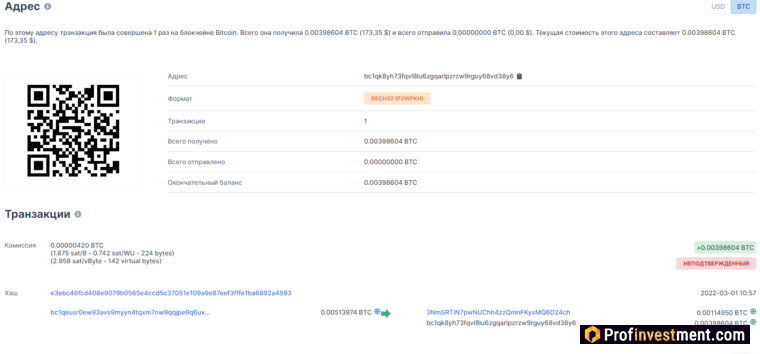
Просмотр адреса в блокчейн-обозревателе
Sorry, you have been blocked
This website is using a security service to protect itself from online attacks. The action you just performed triggered the security solution. There are several actions that could trigger this block including submitting a certain word or phrase, a SQL command or malformed data.
What can I do to resolve this?
You can email the site owner to let them know you were blocked. Please include what you were doing when this page came up and the Cloudflare Ray ID found at the bottom of this page.
Cloudflare Ray ID: 80ef353e08bf4132 • Your IP: Click to reveal 45.84.122.37 • Performance & security by Cloudflare